
In Traditional Chinese Medicine (TCM) school, we learn hundreds of single herbs and hundreds more formulas. As you might imagine, because of the sheer number of remedies to remember, sometimes they start to blur together.
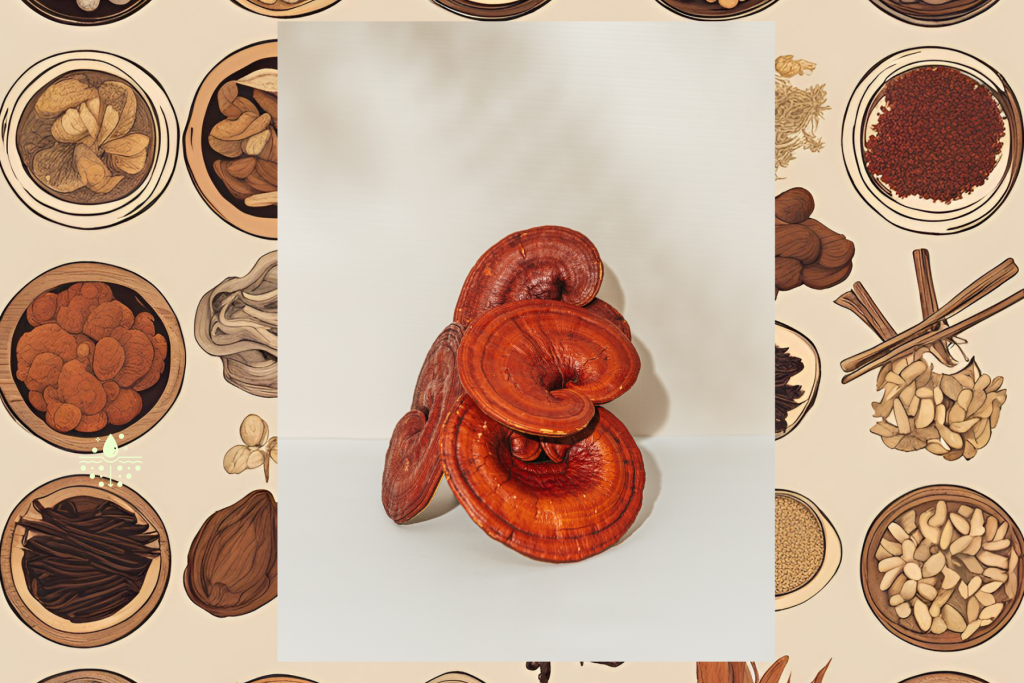
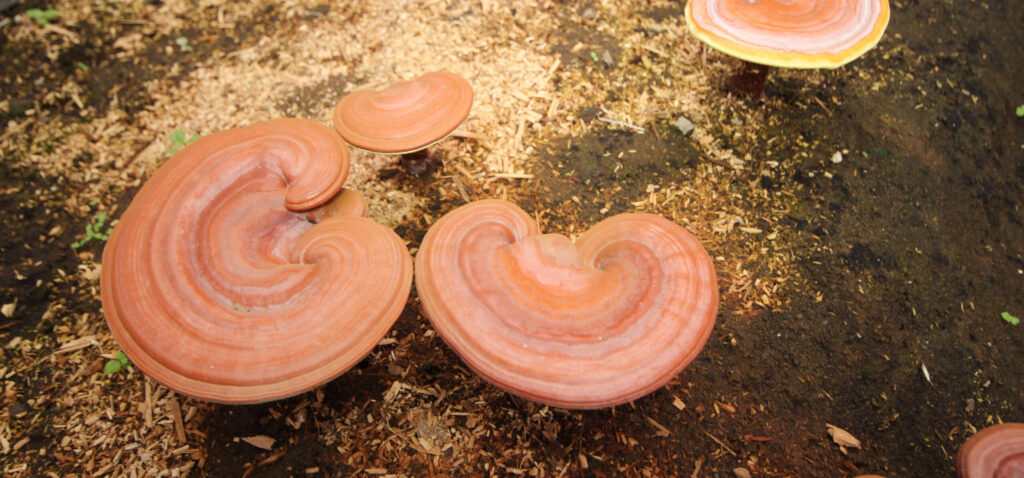
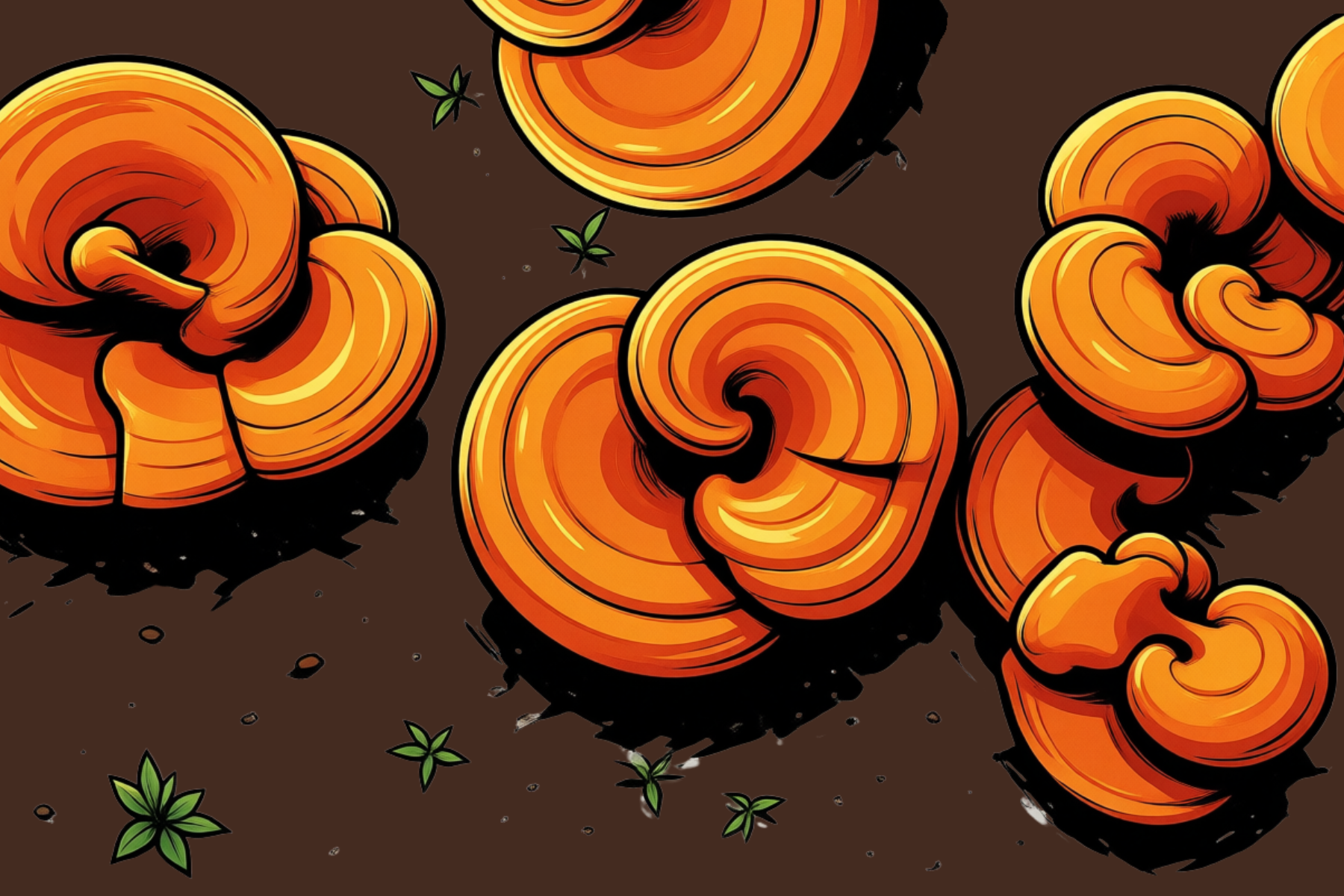
But some herbs stand out, sometimes because they have an interesting name, sometimes because they are different from most others, sometimes because they have a lot of functions. Ling zhi, known as Ganoderma lucidum or reishi mushroom in the West, is memorable for all those reasons.
Translated as “holy herb” or “spirit mushroom,” ling zhi was once reserved for monks who used it to calm their minds for meditation and for emperors and nobility who wanted it for longevity. This powerful mushroom was used to treat a wide range of health issues, and images of ling zhi were carved into palaces, temples, statues, scrolls, and more.
TCM Use of Reishi
In TCM, ling zhi is classified as an herb that calms the spirit, meaning it helps settle the nervous system. It does this without being a sedative and causing drowsiness. It’s used to treat insomnia, anxiety, fright, restlessness, and palpitations.
It’s also a Qi tonic, so it reduces fatigue and weakness without being a stimulant. It supports the lungs, reducing shortness of breath, treating cough and wheezing, and clearing phlegm.
One of the standout things about reishi as a TCM herb is that it is sometimes recommended to be taken on its own, as a single herb. In TCM, herbs are almost always recommended in formulas, blended to create a balanced approach to wellness.
TCM considers that each herb has an affinity to certain organ systems. Perhaps one of the reasons why reishi’s health benefits are so diverse is that it affects quite a number of systems, including the heart, lungs, liver, spleen, and kidneys.
What Modern Research is Discovering
This is where the conversation between traditional knowledge and modern science becomes particularly interesting.
TCM has spent thousands of years observing how natural substances interact with the human body as part of broader system of health. TCM has always been evolving, and modern scientific studies help to further advance our understanding and our use. Science approaches the same questions, identifying individual compounds, studying mechanisms of action, conducting laboratory experiments, and testing outcomes through clinical trials. These broad and specific approaches complement each other.
Today, researchers are taking a close look at Ganoderma lucidum and its many naturally occurring compounds. Two main classes of compounds that have been studied widely are beta-glucan polysaccharides and a variety of triterpenes, which include a further subgroup of compounds unique to reishi, called ganoderic acids. Researchers are investigating the potential roles of these compounds in immune modulation, inflammation, antioxidant activity, metabolic health, and liver protection.
Studies have found a number of biological effects associated with reishi compounds, including effects on inflammatory pathways and immune function. Some human studies have also explored areas such as blood sugar, cholesterol, anxiety, and other aspects of health.
We can now understand why it’s important to include the stem and cap (fruiting body) of the mushroom, as that’s where the bulk of the triterpene compounds are found. We also now recognize why this mushroom needs to be given enough time to grow and not be harvested before its compounds reach medicinal levels, and why it needs to be prepared properly to effectively extract those compounds.
Today, we recognize herbs that can serve opposing health benefits, can be used for a wide variety of health issues, and are non-toxic and safe to use long-term by most as adaptogenic. That’s how an herb like reishi can help with both insomnia and fatigue. It’s how it can both boost immune function and reduce the activity of an overactive immune system, such as occurs with allergies and autoimmune disorders. How it can treat both hypertension and hypotension. The ancients figured that out long ago, and today, modern science recognizes reishi as an adaptogen that helps restore homeostasis.
TCM provides a traditional framework for understanding how and when a substance may be used, while modern research can help us investigate why certain effects may occur and which compounds might be responsible.
From the Classroom to Today
Looking back at those early days of learning ling zhi in TCM school, I think what stands out most is the depth of knowledge behind this humble-looking mushroom. They knew centuries ago the many positive impacts of taking reishi mushroom.
As research continues, we may learn even more about how the compounds in Ganoderma lucidum work and where reishi may have a meaningful role in supporting health. For those of us who learned ling zhi through the lens of Traditional Chinese Medicine, it is exciting to watch modern science catch up with a mushroom that has been respected for thousands of years.